




Table of Contents
Choosing the lighting is a crucial step in designing an interior space. True design objects that sculpt the room and define its atmosphere, pendant lights fit perfectly into an open-concept condo, for example, or above a kitchen island or a dining room table, but how do you make the right choice when faced with so many styles, sizes, and finishes?
This buying guide is designed to help you, whether you're in the middle of a renovation or simply looking for the centerpiece of your decor. It will give you everything you need to select the pendant light that will make your decor shine.
Positioning a pendant light is essential to maximize the effect and functionality. Each room in the house has specific lighting needs, and pendant lights adapt wonderfully to different contexts.
The island is often the heart of the kitchen, a space for preparation, gathering, and sharing. Its lighting must be both functional and warm. Pendant lights are ideal for structuring and illuminating this space.
For direct and effective lighting, prioritize two or three aligned pendant lights, ensuring even light distribution across the entire work surface. A linear fixture is also an excellent option for a more modern and clean style.
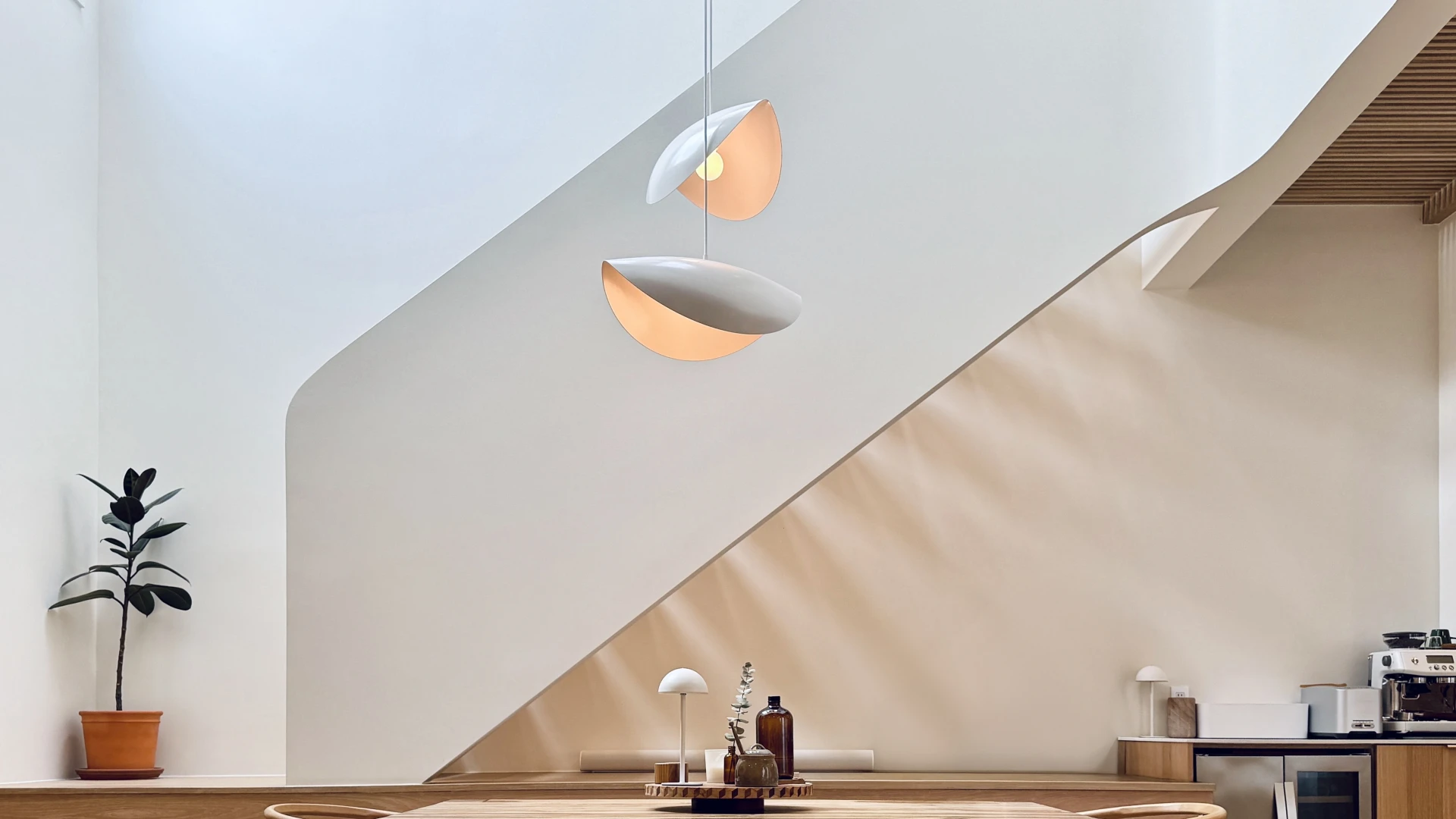
The pendant light above the dining room table is a timeless classic. It's the piece that sets the tone for the meal and creates an intimate atmosphere. A chandelier or a large pendant light can serve as a striking focal point. For a round table, a single central pendant light is perfect. For a rectangular table, prioritize a linear fixture or a row of smaller pendant lights to light along the length.
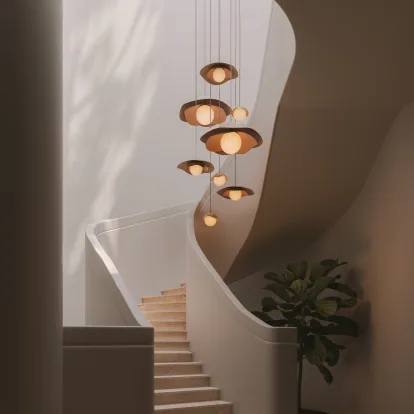
The entryway sets the tone from the very first moments. Well-chosen pendant lights bring character and elegance. In a stairwell, a cluster pendant light or a long, sculptural model highlights the height and creates a striking effect, visible across several floors.
In a living room with a nice ceiling height, an imposing pendant light can replace a traditional ceiling light for more design-driven general lighting. It then becomes a true work of art that structures the space. For standard ceilings, smaller pendant lights can be used to define a reading corner or to highlight a coffee table.
The secret to successful lighting lies in proportions. A fixture must be in harmony with the size of the room and the furniture it sits above. Here are a few principles to guide you.
Location | Installation Height (from the lowest point of the fixture to the surface/floor) |
Above a dining table | 30 to 36 inches from the table |
Above a kitchen island | 30 to 36 inches from the island |
In an entryway or hallway | Minimum 7 feet from the floor |
In a living room (standard ceiling) | Minimum 7 feet from the floor |
For a custom project that takes your specific needs into account, our consultation services are available to help you find the perfect balance.
In 2026, lighting trends confirm a desire for authenticity, warmth, and pieces with strong character. According to the experts at Veranda magazine, the moment is all about layering light sources and sculptural fixtures.
Here are the major currents to watch:
Installing pendant lights must be done carefully to ensure both aesthetics and safety, avoid an impression of visual overload, and ensure good light diffusion.
For your safety, it is strongly recommended to call a certified electrician for the installation, especially if you need to move a junction box or if the fixture's weight is significant. Make sure the ceiling support is adequate.
For more technical advice, feel free to consult our general installation information page.
Finding the ideal pendant light is also a question of budget. You can explore different price ranges without compromising on quality or design standards. . Here are a few benchmarks to guide you based on your investment level.
Choosing the right pendant lights requires a balance between functionality and aesthetics. By considering the location, dimensions, budget, and style, you can create coherent lighting that enhances your space. A well-chosen fixture transforms the atmosphere of a room and contributes to daily comfort.
To take your thinking further or validate certain technical choices, feel free to ask us for advice.
To choose suitable pendant lights, start by analyzing the function of the room, the ceiling height, and the dimensions of the furniture. The diameter of the fixture should be proportional to the surface it lights. The installation height should generally be between 30 and 36 inches above a table or an island to ensure visual comfort and lighting efficiency.
A good benchmark is to choose a fixture whose diameter is about one-half to two-thirds of the table's width. For a table 39 inches wide, a fixture of 20 to 26 inches creates a harmonious visual balance. This proportion prevents it from appearing too massive or too understated in the space.
The recommended height for a pendant light above a kitchen island is generally 30 to 36 inches from the surface. This distance allows for functional lighting without obstructing the view. For several aligned pendant lights, a spacing of about 30 inches center-to-center ensures even light distribution.
The number depends on the length of the island and the diameter of the pendant lights. For a standard island of 6 to 8 feet, two to three fixtures are often enough. The goal is to achieve uniform lighting without visual overload. A linear pendant light can also be an interesting alternative for a cleaner style.
For a warm atmosphere in a dining room or living room, prioritize a temperature of 2700K to 3000K. In a kitchen or workspace, more neutral light between 3500K and 4000K promotes concentration. LED bulbs with a dimmer allow you to adjust the intensity based on the activity and the time of day.
Yes, most pendant lights can be installed on a sloped ceiling thanks to an articulating base suited to the angle. Some models are better adapted than others for this. It's important to check the length of the cord or rod so that the fixture reaches the right visual height. For complex or heavy installations, hiring a certified electrician is recommended.