




Table of Contents
The living room is the heart of the home, a versatile space where you relax with friends or family. In most living rooms, lighting is first planned around the sofa and the television area. A living room light fixture must adapt to your needs with flexibility and elegance.
Well-planned lighting can completely transform the atmosphere of your living room, sometimes warm and intimate, sometimes bright and welcoming.
In this guide, you'll discover the main types of light fixtures suited to the living room, how to choose the right size and height, and which styles to prioritize based on your decor. You'll also find practical tips for creating balanced, functional, and harmonious lighting, adapted to each living area.
Good living room lighting relies on the intelligent layering of several light sources. This approach, known as layering in interior design, allows you to create different moods depending on the time of day and the activity at hand.
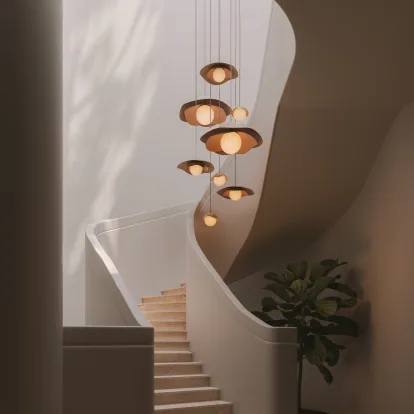
They provide general lighting for the room and form the foundation of your lighting plan. A discreet ceiling light can blend into the decor, while a striking pendant light becomes a true centerpiece that draws the eye and sets the tone for your space.
Placed on a side table, a console, or a shelf, table lamps create warm and decorative pools of light that add depth to your lighting. They are ideal for setting an intimate atmosphere during evenings.
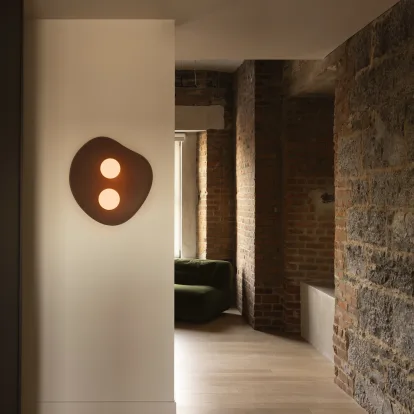
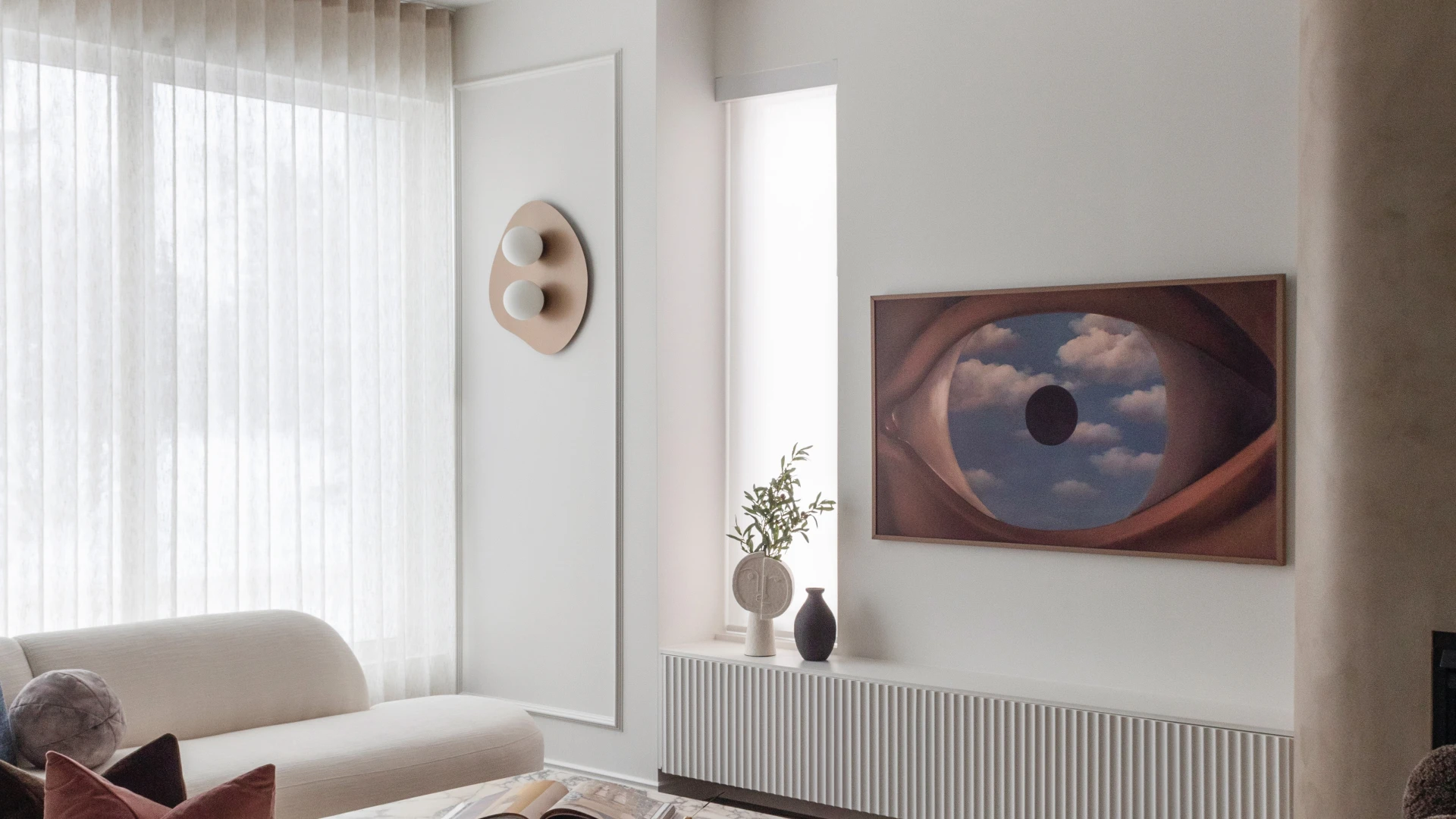
Wall sconces are versatile fixtures that help structure the lighting of the living room while freeing up floor space. They diffuse indirect light, ideal for creating a soft atmosphere while highlighting walls, textures, or certain architectural elements.
Discover our selection to find a model suited to your living room.
Successful living room lighting generally relies on combining several types of light. This approach helps create a pleasant atmosphere while meeting the different uses of the room.
Type of Lighting | Role in the Living Room | Examples of Fixtures |
General lighting | Light the entire room uniformly | Pendant light, ceiling light |
Task lighting | Provide targeted light for specific activities | Reading floor lamp, table lamp |
Accent lighting | Highlight specific decor elements | Wall sconces, LED strips, spotlights |
By combining these three types of lighting, it becomes easier to adjust the atmosphere of the living room based on the time of day and the activities taking place.
Properly sizing your light fixtures is essential to optimize visual comfort and create aesthetic balance:
In a standard living room with an 8-foot ceiling, a discreet pendant light or a diffusing ceiling light is generally enough to provide comfortable general lighting, as long as it is well proportioned to the room's surface area. Conversely, in a large living room or a space with a cathedral ceiling, a fixture that is too small risks being visually lost and creating a sense of emptiness.
In this case, prioritize a larger pendant light or combine several light sources to structure the space.
To design a custom lighting plan suited to your space and your needs, request virtual guidance.
In 2026, living room light fixtures play a role that is as structural as it is aesthetic. Sculptural pendant lights become focal points, while floor lamps and table lamps complete the lighting with successive touches. Contemporary, mid-century, and Japandi-inspired styles stand out for their bold lines, contrasting materials, and confident visual presence.
The right style choice helps define the zones of the living room while creating coherence between furniture, textures, and lighting.
In contemporary living rooms, the choice of fixture style also depends on the relationship between lighting and the materials present in the room. A living room with neutral tones and smooth surfaces will be enhanced by fixtures with minimalist lines and understated finishes. A more textured space, with wood, stone, or strong textiles, will benefit from fixtures with more organic shapes or contrasting materials.
Modern-inspired fixtures with clean silhouettes blend discreetly into the decor, while bolder models become true decorative elements. In an open-concept living room, it is often wise to harmonize the style of the fixtures with that of adjacent rooms to maintain visual continuity.
To explore these inspirations further and discover living room fixture models matching every universe, browse our collections, designed to integrate naturally into all kinds of styles.
As Forbes points out, good accent lighting can completely transform the perception of a space. This type of lighting aims to highlight the best features of your living room and add an extra dimension to your decor.
Use adjustable spotlights to illuminate a piece of art and create a focal point, wall sconces to emphasize the texture of a brick or stone wall, or LED strips to subtly light shelves and showcase your decorative objects.
A well-lit living room is one that is divided into functional zones. Create a reading zone with a directional floor lamp, a conversation zone with table lamps on side tables, and a television zone with indirect lighting to avoid reflections on the screen.
This zonal approach allows each family member to enjoy the living room according to their needs, without compromising the comfort of others.
Careful installation is essential to make the most of your light fixtures and ensure optimal visual comfort on a daily basis. Each type of fixture must be positioned precisely to avoid glare, shadow zones, and visual imbalances.
For pendant lights and ceiling lights, make sure to maintain a sufficient height to allow smooth circulation in the room while ensuring uniform light diffusion. Floor lamps should be placed in a way that lights a specific zone, such as an armchair or a sofa, without projecting direct light into the eyes.
Wall sconces are best installed at eye level or slightly above to diffuse pleasant indirect light.
The number of light points also plays a key role. A well-lit living room generally combines several sources strategically distributed rather than a single overly powerful central fixture. This approach allows the lighting to be adapted to different times of day.
For an optimal and safe result, calling on a guidance or professional installation service helps validate the heights, locations, and electrical circuits before final installation.
Since the living room is a versatile space, certain mistakes can quickly undermine the comfort and functionality of the lighting.
An accessible budget can already create coherent and functional living room lighting, provided that light sources are well distributed. At this level, the goal is to combine a simple main fixture with one or two supplementary fixtures to avoid lighting that is too uniform. Floor lamps and table lamps are often the best choices to add warmth without overloading the space.
With a mid-range budget, it becomes possible to further structure the living room thanks to fixtures with bolder design and higher-quality finishes. A well-proportioned central pendant light, combined with wall sconces or a quality floor lamp, helps create distinct zones and makes it easier to integrate dimmers to adjust the atmosphere.
A high-end budget, for its part, offers great creative freedom. It allows you to invest in bolder fixture compositions, refined materials, and advanced lighting systems. At this level, lighting becomes a true architectural element, capable of structuring the space while fully reflecting the style of the living room.
Explore our lighting collections to discover options suited to every budget.
Choosing a living room light fixture is a subtle balancing act between functionality and aesthetics. By intelligently layering different light sources, playing with styles, and creating functional zones, you'll build a welcoming and versatile living room.
Need help bringing your vision to life and creating the perfect lighting for your living room? Contact us to benefit from the expertise of our advisors.
For a living room light fixture, the ideal is to combine several types of lighting to create a versatile space. Use a ceiling light or pendant light for general light, floor lamps for reading corners, and table lamps for a warm atmosphere in the evening. This layering allows you to adapt the lighting to each activity.
To properly light a living room, think in terms of zones and uses rather than the room itself. The sofa zone calls for soft, indirect light, while a reading corner requires more directional lighting. Install dimmers to adjust intensity based on the time of day and add accent lighting to create depth.
The wattage depends on the size of the living room and the ceiling height. In general, plan for between 2000 and 4000 lumens for a medium-sized living room. Distribute this output among several sources: a pendant light for general lighting, a floor lamp for reading, and a few table lamps for ambiance, to achieve balanced lighting.
For a living room, a warm color temperature between 2700K and 3000K is ideal for creating a welcoming and relaxing atmosphere. This yellowish hue evokes the natural light of evening and promotes relaxation. You can opt for a slightly cooler temperature (3000K) for general lighting and a warmer temperature (2700K) for ambient lamps.
Ideally, yes. Dimmers allow you to adapt the light intensity to different times of day and to living room uses. Even installing dimmers on one or two key sources significantly improves visual comfort.
In a living room with a cathedral ceiling, lighting must be distributed across several levels to avoid an empty feel or light that is too distant. Combine a well-sized pendant light with floor lamps and wall sconces to bring light back to human height. This approach helps structure the space while maintaining a warm atmosphere.