




Table of Contents
Your bedroom is your personal sanctuary, the place where you recharge after a long day. Choosing the right light fixture for your bedroom is essential to creating an atmosphere that is calming, functional, and conducive to rest.
Well-planned lighting directly influences the quality of your sleep, your visual comfort, and the overall ambiance of the room. The light fixture you choose will need to meet several needs: general lighting, reading light, and soft ambient light to promote relaxation.
In this complete guide, we will explain how to choose a light fixture suited to your bedroom by exploring the types of fixtures to prioritize, the right heights to avoid glare, the styles conducive to relaxation, and the principles of adjustable lighting that supports a natural transition to sleep.
Bedroom lighting must be soft, adjustable, and adapted to your different activities. Unlike other rooms in the house, the bedroom requires a more nuanced approach that promotes relaxation while still providing enough light for daily tasks.
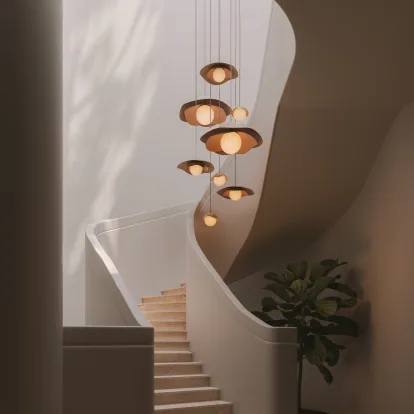
A ceiling light or pendant light provides general, uniform lighting. It is the starting point of your lighting plan and the main source that allows you to see clearly when you enter the room or put away your clothes.
For softer, more uniform diffusion, opt for ceiling or pendant lights designed for rest areas.
Essential for reading in bed, bedside lamps or wall-mounted reading lights provide directional lighting that won't disturb your partner, along with great flexibility to adapt the light to your position and your nighttime habits. These fixtures also create a warm ambiance for moments of relaxation before sleep.
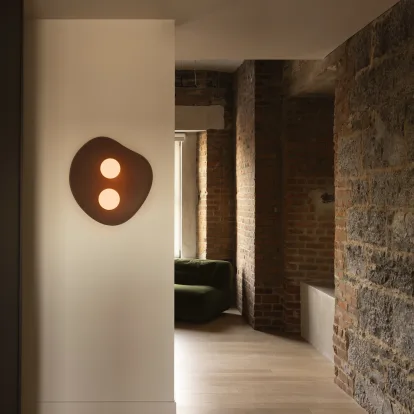
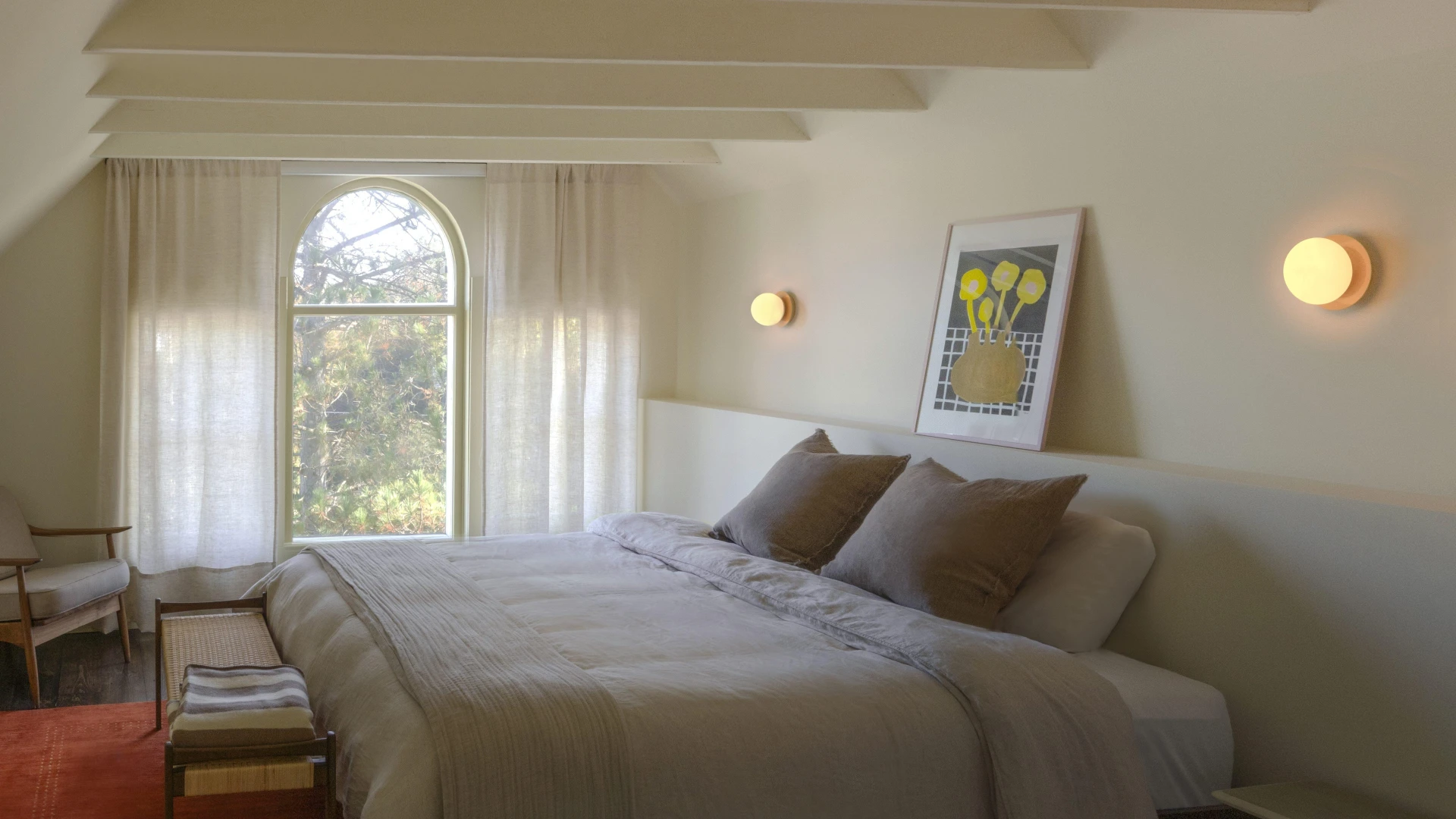
Wall sconces provide soft, indirect light, ideal for creating a cozy atmosphere. They offer lighting that is both functional and aesthetic, while freeing up space on bedside tables.
Properly sizing your light fixtures is crucial for visual balance and optimal comfort. When lying down, a poorly adjusted height or angle can quickly become uncomfortable; take your actual posture in bed into account before finalizing the installation.
Here are the rules to follow for each type of fixture:
For tailored advice suited to your space, feel free to request in-store guidance.
A bedroom light fixture should prioritize soft shapes, natural materials, and finishes that promote visual relaxation. Textile shades, opal glass, and structures with clean lines diffuse enveloping light, ideal for rest areas.
Matte finishes, such as soft black, brushed brass, or off-white, reduce reflections and reinforce the cozy ambiance. The style of the fixture should support calm and simplicity, without ever visually dominating the space.
Visual perception once the light is turned on must also be considered. Models that are too contrasted or too bright draw attention and can undermine the sense of calm you're looking for. Conversely, fixtures with soft tones and diffusing materials contribute to a more enveloping atmosphere.
Minimalist or Scandinavian-inspired styles are particularly well-suited to bedrooms, as they focus on simple shapes and controlled light diffusion. More decorative fixtures can still find their place, provided they are used sparingly and emit indirect light.
The goal is not to make the light fixture a central element, but to integrate it harmoniously into the decor so that it supports rest without unnecessarily drawing visual attention.
Discover all our collections to find the style that matches your vision.
For the bedroom, prioritize warm, relaxing light with a color temperature between 2700K and 3000K. This yellowish hue mimics the natural light of sunset and promotes the production of melatonin, the sleep hormone. Absolutely avoid blue light (above 5000K) before sleeping, as it can disrupt your circadian cycle and delay sleep onset.
A good lighting routine consists of gradually reducing light intensity in the hour leading up to bedtime. Use dimmers to create a smooth transition between evening activities and rest time. This gradual approach signals to your body that it is time to prepare for sleep.
Accent lighting adds a touch of sophistication and personality to your bedroom. Use LED strips behind the headboard to create a soothing light halo, or install adjustable spotlights to highlight a piece of art, a plant, or a decorative niche.
These small details transform an ordinary bedroom into a unique space that reflects your personality.
Unlike other rooms in the house, bedroom lighting is often used in a seated or lying position. The positioning of fixtures therefore becomes particularly important to avoid any direct light in the eyes. Bedside lamps and wall-mounted reading lights should be placed slightly back from the edge of the bed and angled toward the book rather than toward the face to limit glare. For general lighting, prioritize soft, uniform diffusion rather than a source that is too intense. Wall sconces and indirect sources thus contribute to creating a more comfortable atmosphere that is conducive to rest.
In a shared bedroom, it is recommended to provide independent controls on each side of the bed so that each person can adjust their lighting without disturbing the other. To validate heights, locations, and electrical circuits before final installation, professional guidance helps avoid mistakes that are difficult to correct afterward.
Certain specific mistakes can directly undermine the quality of rest and visual comfort, even if the lighting seems adequate at first glance.
Type of Lighting | Role in the Bedroom | Examples of Fixtures |
General lighting | Provides the main light to move around and see clearly in the room. | Ceiling light, pendant light, diffusing ceiling light |
Task lighting | Allows for specific activities such as reading in bed. | Bedside lamps, adjustable wall-mounted reading lights |
Ambient lighting | Creates a soft, relaxing atmosphere in the evening. | Wall sconces, indirect lighting, LED strips |
In a bedroom, the lighting budget should above all be allocated based on the real impact of each fixture on comfort and sleep, rather than on the overall visual effect.
With a more limited budget, priority should generally go to reading light and supplementary lighting near the bed. Well-positioned bedside lamps or reading lights, providing warm and controlled light, will have a much more positive effect on daily life than a central decorative fixture.
When the budget allows, the next step is to improve the quality of general lighting. A diffusing ceiling light or a soft-light pendant helps reduce contrasts and creates a more enveloping atmosphere, especially appreciable in the evening. This is also the stage where adding dimmers becomes relevant to support evening routines.
A higher budget finally allows you to refine the overall experience. Integrated indirect lighting, independent controls on each side of the bed, or advanced dimming systems contribute to creating a fully adjustable environment, designed to promote relaxation and better-quality sleep.
Choosing the right bedroom light fixture is the key to creating a space that is both functional and calming. By thoughtfully combining general lighting, reading lamps, and ambient sources, you'll create a bedroom where it's good to live, relax, and enjoy restorative sleep.
Ready to transform your bedroom into a wellness sanctuary? Contact us to discuss your custom lighting project.
For a bedroom light fixture, the ideal is to combine several types of light sources. Three elements are essential: a ceiling light or pendant light for general lighting, bedside lamps or reading lights for reading, and wall sconces for a soft ambiance. In short, this layering of lights will allow you to adjust the atmosphere according to your needs and activities.
For a bedroom, a total output of approximately 1500 to 3000 lumens is recommended, distributed among several sources. The key is to be able to vary the intensity depending on the time of day. General lighting of 1000 lumens, complemented by bedside lamps of 400 lumens each, is a good starting point. The use of dimmers is strongly recommended to fine-tune the intensity.
Opt for warm, relaxing light with a color temperature between 2700K and 3000K. This yellowish hue promotes relaxation, creates a calming atmosphere, and naturally prepares you for sleep. Avoid cool lights (above 4000K), which are more stimulating and better suited to workspaces or kitchens.
Ideally, lighting controls should be accessible both at the bedroom entrance and near the bed. This configuration lets you turn fixtures on or off without getting up and adjust the ambiance to suit your activities. In a shared bedroom, independent controls on each side of the bed significantly increase comfort.